

Written by Mia Mauro

Table of Contents
Introduction
My name is Mia Mauro and I am interviewing my nonna, Maria Venneri. This interview took place in Maria’s home in Hamilton, Ontario, Canada on October 14th, 2025. The purpose of this interview is to gain insight into the lived experiences of Italian people who immigrated to Canada. A more personal purpose of this study is to learn more about my family history. Many methods were used to collect data for this assignment. First, I created an oral history by conducting a semi-structured interview. I prepared a set of questions catered to the interviewee. I then filmed and translated the interview. Another method I used to collect data was collecting and documenting a personal archive. I have collected photos and documents from family archives that help tell the interviewees story. Lastly, I have analyzed and reflected on the interview I conducted. I share what I have learned as a researcher and connect the themes of this interview to course content.

Interview
Translation of Interview
Analysis
During week five of this course, we learned about heritage, ethnicity, and multiculturalism. This lecture stood out to me, so I decided to create questions that encourage conversation about this topic. After watching the interview through a lens of multiculturalism, I can notice a connection between Maria’s answers and our course material. During lecture, we discussed how culture presents itself in our lives, what is considered Italian heritage, how it is preserved in Canada, and explored the theory of transculturation. This interview provides insight on the different ways an Italian immigrant preserves their culture and celebrates it in Canada. During the interview, Maria discusses specific Italian customs and traditions she kept alive in Canada. This included making homemade tomato sauce with her family, going to church, joining Italian clubs, having a garden, and maintaining friendships with other Italians. She also describes the Canadian traditions she really liked. Traditions like Christmas, Easter, Halloween and watching hockey were all ways she enjoyed embracing Canadian culture. One of our readings for week five is titled “In Italics In Defense of Ethnicity.” Antonio d’Alfonso explores the idea of choosing one’s identity in a Pluricultural country. He states that “Perhaps culture is transcultural in essence. Perhaps what is needed is not another synonym for culture but a totally brave new way of comprehending the very notion of how culture can embrace something that is more than just nationalistic and territorial (pg. 177).” Culture is so much more than just a nationality or a territory. Culture is complex and embraced in many different ways. Balancing more than one culture can be difficult, especially when you are thrown into a completely new country and are expected to learn different traditions and societal expectations. Learning about how Maria keeps her Italian culture alive while also embracing new Canadian culture was insightful and inspiring.

Reflection
Interviewing my nonna reminded me how important patience and compassion are. As I was planning to conduct this interview, I was expecting a smooth interview done in English that will provide me with a lot of information. When I presented her with my original questions, she struggled to give insightful answers and told me she wanted to do the interview in Italian. Even after I made the questions more straightforward, she was still being very short in her responses. Researchers are faced with many obstacles they are not prepared for. Taking a step back and analyzing the situation is key in the research process. I had to take a step back, think about what I can do to make this interview run more smoothly, and apply those changes on the spot. As a researcher, I had to have patience with my interviewee and understand that this is her first interview and she is elderly. After going through the revised questions, she felt more comfortable having her daughter and niece guiding and reminding her of her answers. I was not expecting this, but I had to prepare as best as I could for this change. All I can do in this situation is accept that the interview is not going to go as planned and make changes to gain as much information as I can.
Another thing I struggled with was her perspective on her story. My nonna is the strongest woman I know. She gave up her life in Italy and went through so many obstacles and struggles to create a new life in a new country. Although I can admire the amount of strength, resilience, and courage this takes, she sees her story in a different light. She has a “I had to do what I had to do” mindset. She plays down her strength because she faced her challenges head on and overcame them, she had no other choice. When I asked her what her biggest struggle was while immigrating to Canada, she did not have an answer for me. Although I have my opinions about her experiences, as a researcher I had to put my opinions and biases to the side and let her tell her story through her words. I gave her the opportunity to tell her story through the lens she views it in. In this class we have learned about the dangers of a single story and how important it is to hear about the lived experiences of people, especially Italians, so I made it a priority to let her perspective be heard during this interview.

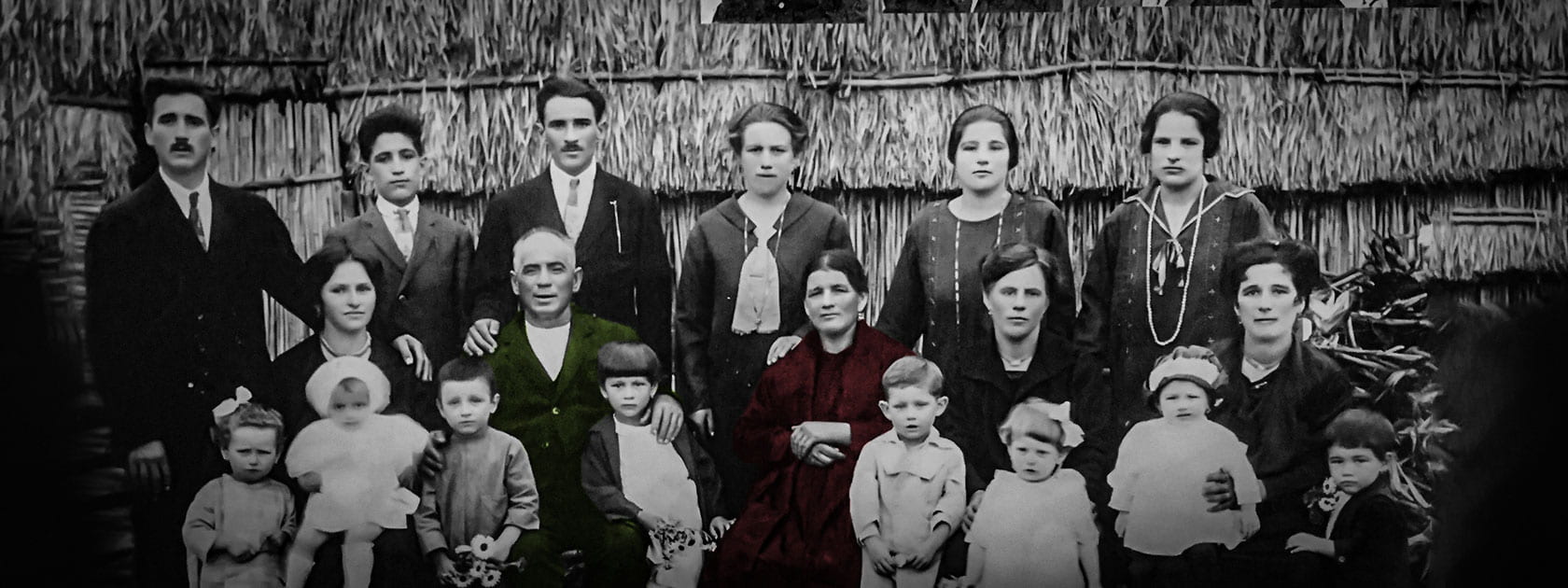
Gallery of Historical Family Documents


Maria’s Hometown – Rogliano, Cosenza, Italy
Last summer I spent six weeks in my nonna’s hometown, Rogliano. These are some pictures I took during my trip.


